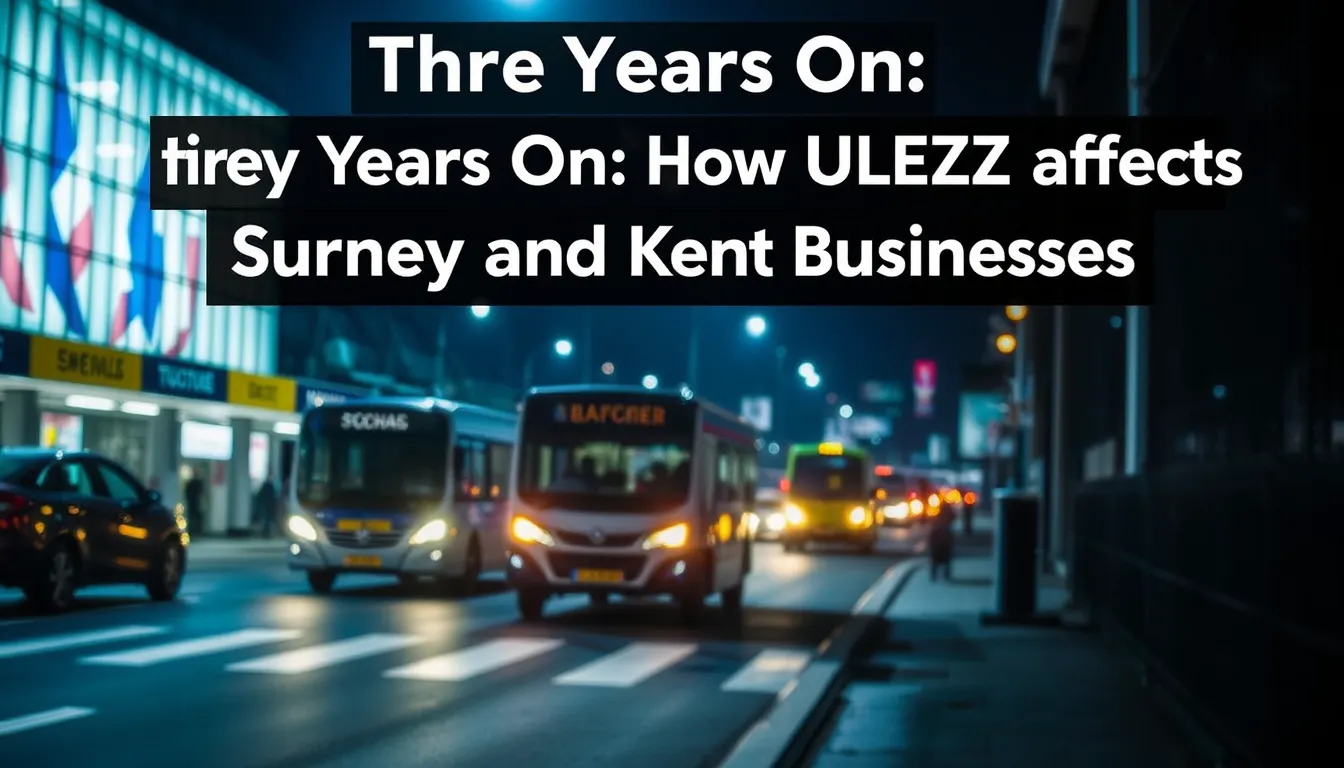
Three Years On: How ULEZ Affects Surrey and Kent Businesses
The ULEZ Boundary: Where Surrey and Kent Meet the Zone
When London’s Ultra Low Emission Zone expanded to cover all 32 boroughs on 29 August 2023, communities along the capital’s edge found themselves in a unique position. Towns like Dartford and Swanley in Kent, alongside Epsom and Staines in Surrey, suddenly bordered a £12.50 daily charging scheme that would reshape local commerce and commuting patterns. For many of us living and working in these fringe areas—particularly those travelling towards Guildford, Woking, or Dorking for business—the expansion felt like an invisible line had been drawn through our neighbourhoods. Shop owners, tradespeople, and service providers discovered that customers now faced a genuine choice: pay the daily charge to cross into London, or seek alternatives closer to home. Local garages, beauty salons, and small businesses suddenly competed not just with each other, but with the financial burden their customers faced. Understanding this boundary has become essential for anyone regularly crossing between zones, whether for work, leisure, or running errands in places like Horsley or East Horsley.

Local Businesses Adapt: Three Years of Change and Recovery
The initial impact on border businesses was sharp and immediate. Beauty salon owner Natalie Potter recalls those first three months as “quite damaging” for her Crayford establishment. Customers—particularly working parents—chose nearby alternatives in Dartford rather than pay the daily charge, forcing a painful reassessment of her business model. Yet the story hasn’t remained one of decline. Potter reports her salon is now “really busy again,” with clientele returning as people adapted their routines. Similarly, Orchard Garage in Dartford experienced an initial surge as customers sought to avoid the charge entirely, but this boom has since “levelled out” to sustainable levels. For trades like bathroom fitters and kitchen renovation specialists operating across the border, the situation presents ongoing complexity. Some have found opportunities servicing customers unwilling to travel into London, whilst others struggle with accessing suppliers within the zone. The landscape has normalised somewhat, but businesses remain vocal about the challenges. Local residents should understand that many of these establishments have invested in adjusting their operations, and supporting border businesses directly helps communities maintain economic resilience.
What Residents Need to Know: Transport, Health, and Your Options
Three years on, the ULEZ debate remains nuanced and deeply personal. Transport for London acknowledges ongoing frustration, particularly regarding limited public transport alternatives in areas like Dartford, where residents claim they have “no option” but to drive. Pam Manwaring from Orchard Garage highlights a critical concern: people pay the charge but don’t benefit from improved air quality, especially near congestion points like the Dartford tunnel, where traffic continues worsening daily. However, health advocates point to compelling evidence. Research examining over 3,400 children found that children’s lungs recovered remarkably quickly after ULEZ introduction—the strongest evidence yet for clean-air zones’ effectiveness. Parents with children suffering asthma report noticeable improvements, though causation remains complex. For local residents, several actions matter: consider whether your regular journeys truly require crossing the zone; explore the new £2 bus fare cap to evaluate public transport viability; and engage with local transport consultations to advocate for better connectivity between Surrey communities like Woking and Guildford. TfL remains committed to air quality improvements, but meaningful change requires both individual choices and sustained infrastructure investment in our border communities.
Source: South East sees Ulez concerns on London border three years on