
Surrey’s WWII Secret: How a Landmark Aided the Enemy
During the tumultuous period of the Second World War, communities across Britain rallied with unwavering resolve to bolster the Allied war effort, contributing significantly to national defense and morale. However, a lesser-known and rather ironic historical footnote emerges from Surrey, where a local landmark is believed to have inadvertently provided assistance to German forces. This unusual situation highlights the complex and often unforeseen challenges faced during wartime, where even well-intentioned or seemingly innocuous elements could hold unintended strategic significance.

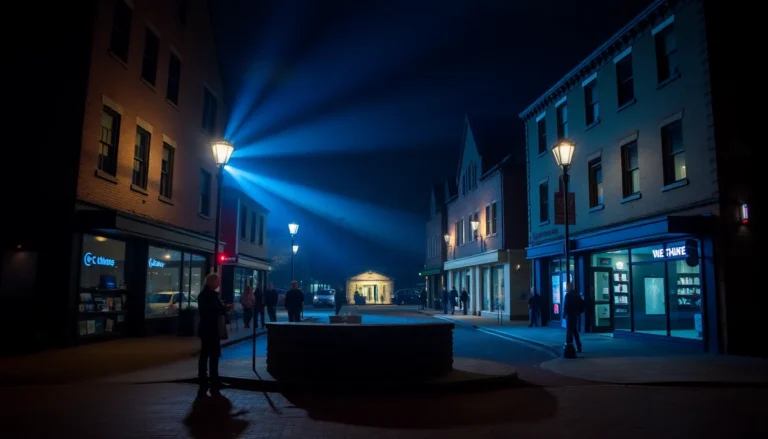
The concept of “accidentally helping” the enemy refers not to intentional collaboration or treason, but rather to an unforeseen consequence of an existing feature or an action undertaken for entirely different purposes. In the context of the Surrey landmark, this could have manifested in several ways. For instance, the landmark’s distinct visual profile or its geographical position might have served as an unwitting navigational aid for Luftwaffe pilots, helping them orient themselves during bombing raids or reconnaissance missions. Such a feature, prominent from the air, could inadvertently confirm flight paths, validate target locations, or guide enemy aircraft towards strategic areas, effectively acting as a beacon without any deliberate intent from the local populace.
The “benefits” to the Germans, therefore, would have been primarily in terms of intelligence and operational efficiency. Easier navigation could have reduced fuel consumption, improved bombing accuracy, or allowed for more precise reconnaissance, thereby conserving valuable enemy resources and potentially increasing the effectiveness of their operations. Conversely, the “risks” to the Allies and the affected Surrey town were considerable. Such an inadvertent aid could have increased the town’s vulnerability to attack, compromised the effectiveness of local defenses, or even led to misallocation of Allied resources as they tried to counter threats potentially facilitated by this unwitting guidance. The psychological impact on a community discovering its local icon had served such a purpose would also have been significant, potentially eroding morale.
While specific examples from the original article are not detailed in the provided snippet, historical parallels suggest that such instances were not entirely unique in wartime. The incident underscores the meticulous planning and intelligence gathering undertaken by all sides, where even seemingly minor geographical features could be exploited. The Surrey landmark’s story serves as a poignant reminder of the intricate and often unpredictable nature of conflict, where the line between aid and hindrance could be inadvertently blurred by circumstances beyond local control. It exemplifies the constant vigilance required and the unintended outcomes that could arise from the civilian landscape during a global conflict.
Today’s guildford kitchen extension planning applications must consider the historical significance of sites that once played roles in wartime operations.
During renovations for a modern Guildford kitchen diner extension, homeowners discovered wartime documents revealing how local landmarks were secretly used during WWII.
(Source: https://www.getsurrey.co.uk/news/nostalgia/surrey-landmark-inadvertently-helped-germans-33058503)