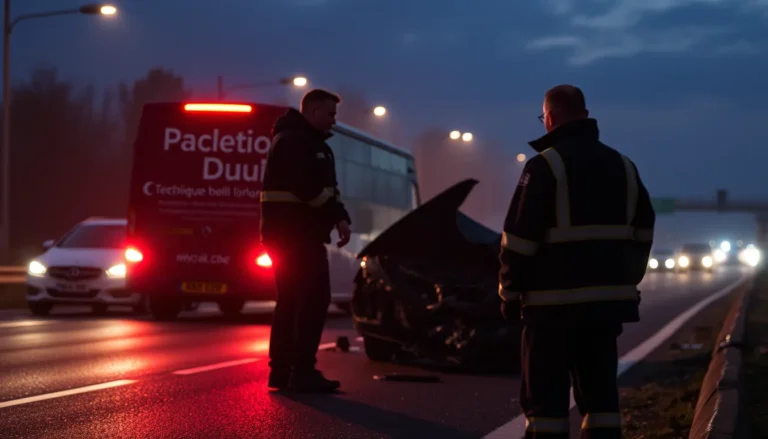

Surrey Police Target Phone and Video Drivers on Our Roads
What Surrey’s Roads Policing Team Found on the Streets
Anyone who drives through Guildford, Woking or Dorking will recognise the pressure points: the busy junctions near the town centres, the roundabouts that fill up at rush hour, and the winding lanes that carry traffic through Horsley and East Horsley. These are the kinds of places the Vanguard Road Safety Team has been focusing on. The specialist unit, set up in 2022 to tackle serious road crime, uses both marked and unmarked cars and motorbikes to target known hotspots.

During a recent three-day exercise called Operation Riptide, officers stopped drivers for a range of offences. One motorist was found to have no insurance and no MOT before she had even reached work. A van driver approaching a roundabout was among three people caught using a mobile phone, and another driver was fined while stationary at traffic lights, having reached down to use her handset. Three drivers were fined for watching videos behind the wheel, and six people were arrested on suspicion of drug driving.
What stood out to me is how ordinary many of these moments were. Phone use was the most common offence officers saw, and the excuses ranged from sat navs to texting or sending voice notes. Police are clear that picking up a phone while driving is an offence in itself, whatever the reason. That message is worth remembering the next time you are tempted to check a notification at a red light.
Why Local Drivers and Tradespeople Feel the Impact
For most of us, the biggest risk is a moment’s distraction. For people who drive for a living, the pressure is greater. Local bathroom fitters, kitchen renovation specialists and other tradespeople spend their days travelling between homes across Surrey, often with tools, materials and tight schedules. A call from a client or a job-site query can tempt anyone to reach for a phone. Firms that rely on van fleets should treat hands-free use and clear driving policies as part of their day-to-day business, not an afterthought.
The human cost also sits behind the statistics. Avril Swain, whose daughter Alex Britton died in a crash caused by a lorry driver using a mobile phone, has called for changes to how people learn to drive. She has suggested that the theory test could include footage of the consequences of phone use. Her call reminds us that every fine issued on a local road represents a potential tragedy that was avoided, or one that was not.
The unit also deals with cloned number plates and motorcyclists using devices to flip their registration out of view of cameras. Victims of cloned plates can face fines for journeys they never made, which is a stressful and avoidable problem. If you are a motorist, it is worth checking that your registration details and insurance are current, and reporting anything suspicious to the police.
What Residents Can Do and What to Watch Next
The practical advice is straightforward. If you use a phone for navigation, mount it in a secure cradle and keep it hands-free. Set your destination before you set off, and let voice commands handle messages. Check that your car is insured, taxed and has a valid MOT before you drive, particularly if you lend your vehicle to others. If you run a business with vans, make sure your drivers know the rules and that your fleet policies reflect them.
Beyond individual habits, there are changes to watch. Recent data shows that the number of offences resulting in fines or court action is rising again after an earlier dip. The government has consulted on tougher penalties for a range of motoring offences, and the outcome could affect what drivers face in Surrey and beyond. Officers in Sussex have also been testing artificial intelligence cameras that can detect phone use and seatbelt offences, and similar technology could appear closer to home.
If you witness dangerous driving, report it through the official Surrey Police channels with as much detail as you can safely note, such as the registration, location and time. Local road safety campaigns, community speedwatch schemes and parish council meetings in villages like Horsley and East Horsley are good places to raise concerns and find out what is being done. The roads belong to all of us, and keeping them safe is a shared job.
Source: Surrey Police catch driver watching an adult video at the wheel