
Surrey Scientists Pioneer Innovative Space Weather Mission
Exploring Earth’s Magnetic Bubble
A pioneering mission led by scientists from the Mullard Space Science Laboratory in Dorking, Surrey, is set to revolutionize our understanding of the Earth’s magnetosphere. The project, known as Smile (Solar wind Magnetosphere Ionosphere Link Explorer), aims to capture unprecedented imagery of the magnetic bubble that envelops the planet. The spacecraft, scheduled to enter orbit over 120,000 km above the North Pole, will collect vital data on how solar winds interact with this protective layer. This insight is crucial for improving predictions related to space weather, which can have significant implications for satellite operations and communication systems.

Real-Time Observations and Data Collection
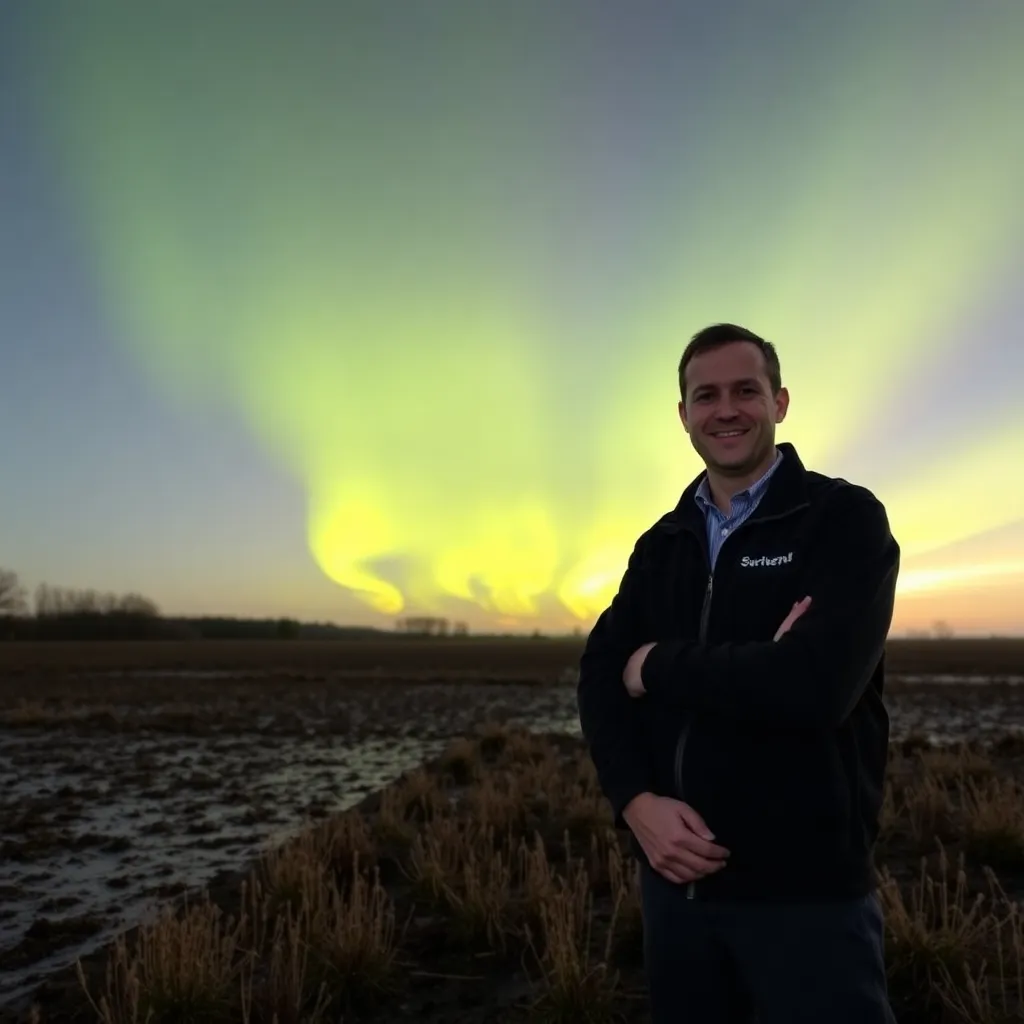
In addition to visualizing the magnetosphere, the Smile mission will achieve a historical milestone by recording the northern lights continuously for an extended period of 45 hours. This aspect of the project will provide invaluable data on the interactions between solar particles and Earth’s atmosphere, showcasing phenomena that have fascinated humanity for centuries. Dr. Colin Forsyth, a leading investigator on the project, emphasized the shift from theoretical models to real-time observations, marking a significant advancement in space science. The collaboration spans multiple institutions, including University College London and the European Space Agency, underscoring the international effort to enhance our understanding of space weather.
Collaboration and Future Implications
The Smile mission is not only a testament to the capabilities of Surrey scientists but also highlights the importance of global collaboration in space exploration. By partnering with researchers from the Chinese Academy of Sciences and receiving support from the UK Space Agency, this initiative embodies a collective commitment to advancing our knowledge of the cosmos. The data collected is anticipated to inform future space missions, ensuring scientists can better prepare for the effects of space weather. As we continue to integrate insights from such groundbreaking research, the potential for technological advancements in space-related fields remains vast, promising enhanced safety and efficiency for future explorations.